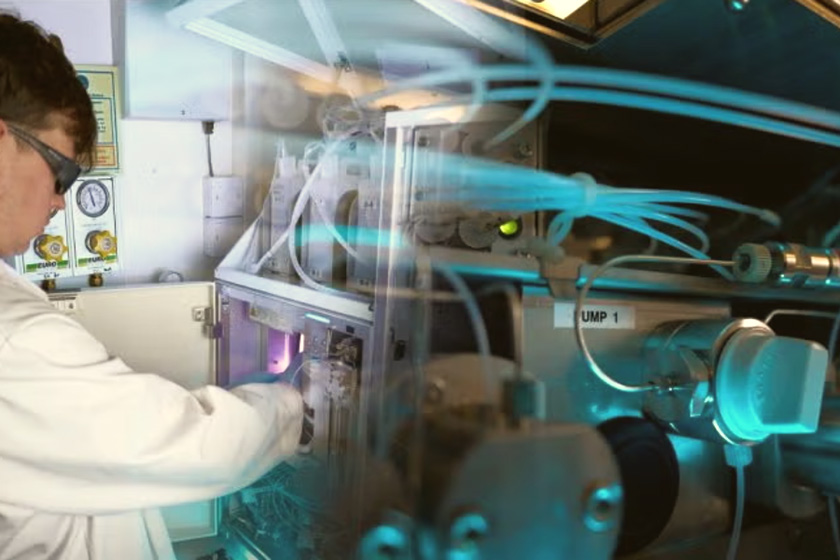
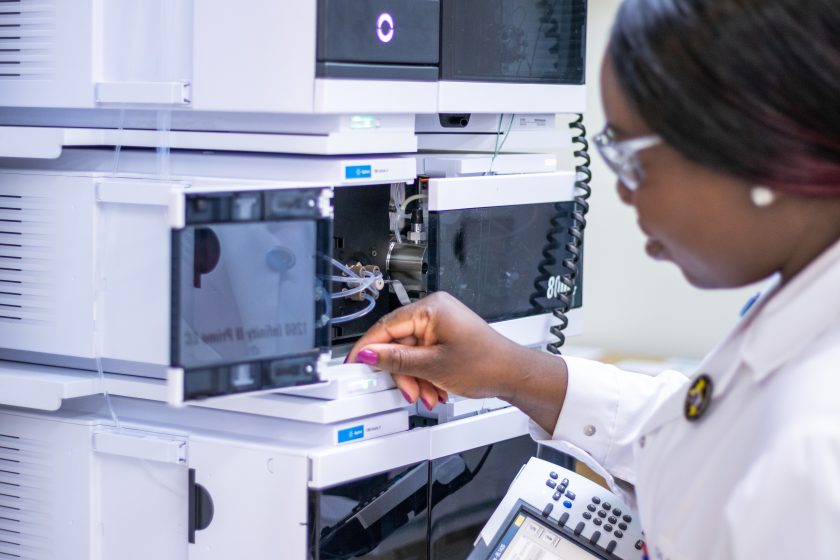
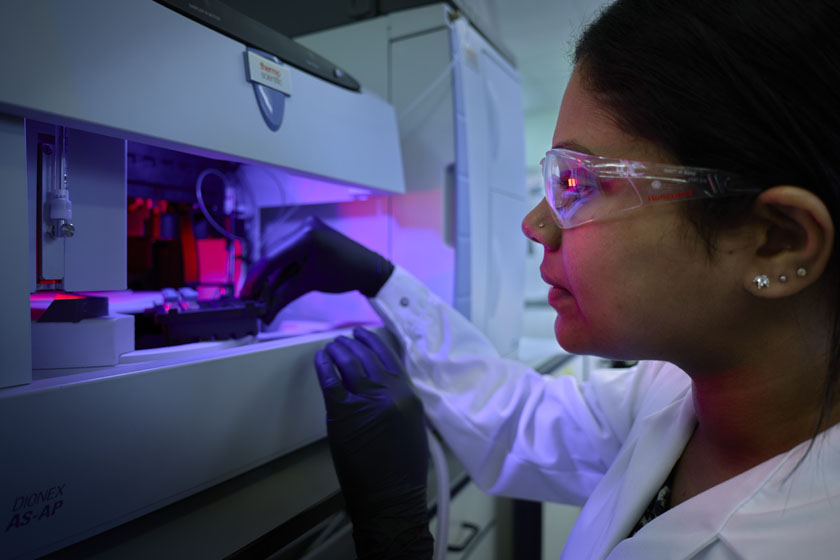
Gas Chromatography Testing is a powerful, highly versatile analytical technique used to separate, identify, and quantify volatile and semi-volatile organic compounds. Within the pharmaceutical industry, in particular, Gas Chromatography (GC) plays a critical role in ensuring product quality, safety, and regulatory compliance, supporting applications such as residual solvent analysis, impurity profiling, extractables and leachables, and raw material verification, all in line with global pharmacopoeial requirements. It is valued for its high sensitivity, precision, and robustness, making it an essential tool throughout drug development and quality control.
Gas Chromatography is widely used almost entirely for volatile organic materials. The technique is rapid, simple and can cope with very complex mixtures of more than 100 components and very small sample aliquots (nanograms).
Our Chromatography laboratory has a wide range of detectors available to accommodate the needs of our clients, including:
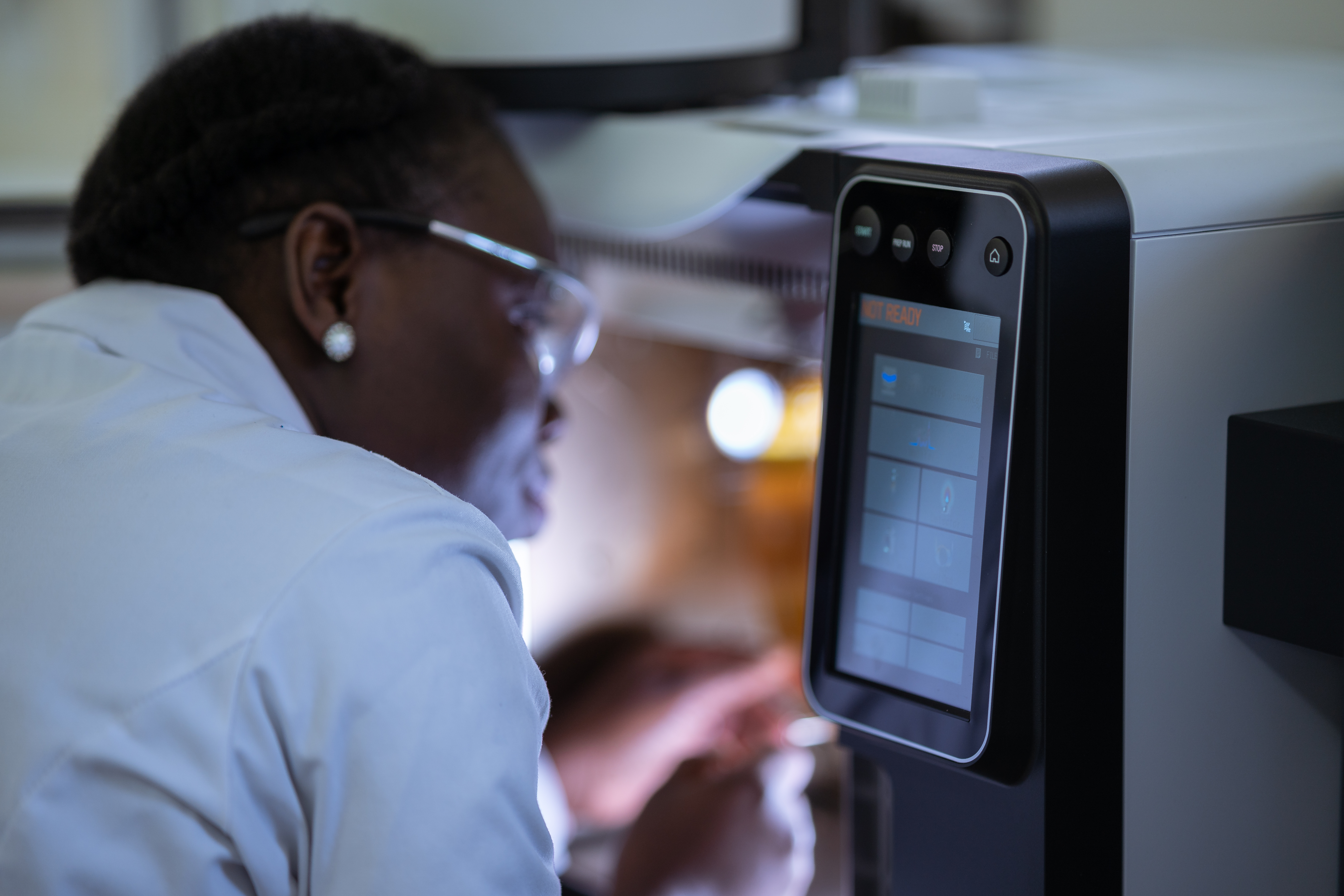
Mass Spectrometry
Mass Spectrometric Detectors (MS) play a crucial role. MS detectors, often considered the gold standard, ionise analytes and separate the ions based on their mass-to-charge ratio. They can provide structural information, exceptional sensitivity, and powerful qualitative and quantitative capabilities.
Flame Ionisation
Flame Ionisation Detectors (FID) are the most widely used and work by burning organic compounds in a hydrogen–air flame, producing ions that are measured as an electrical current. FIDs offer high sensitivity for hydrocarbons, a wide linear range, and excellent robustness, making them ideal for general organic quantitation.
Electron Capture
Electron Capture Detectors (ECD) are highly sensitive to electronegative species, particularly halogenated compounds, nitriles, and organometallic compounds. They work by monitoring how electronegative analytes capture electrons from a constant electron stream, thereby reducing the current and providing high sensitivity.
Thermal Conductivity
Thermal Conductivity Detectors (TCD) measure changes in the thermal conductivity of the carrier gas as analytes pass through. Because different compounds conduct heat differently, the detector produces a measurable signal. TCDs are universal, capable of detecting both organic and inorganic compounds, and are non-destructive.
Barrier Ionisation Discharge
Barrier Ionisation Discharge Detectors (BID). The BID detector generates a stable helium (He) plasma within a dielectric barrier discharge cell. The plasma emits high-energy photons (~17.7 eV) capable of ionising nearly all compounds except helium and neon. As analytes elute from the GC column, they are ionised by this plasma, and the resulting ions are collected at an electrode, producing a measurable signal. In essence, the BID operates as a universal, non-destructive detector, capable of detecting organic and inorganic compounds, permanent gases, and volatile solvents at trace levels.
What are the benefits of Gas Chromatography Testing?
- High sensitivity for volatile and semi-volatile compounds, allowing for the detection of trace-level contaminants or impurities that may affect product quality.
- Accurate analysis for a wide range of sample types, including raw materials, active pharmaceutical ingredients (APIs), excipients, intermediates, and finished products.
- Rapid turnaround with GMP-compliant processes designed to support strict production schedules and regulatory deadlines, helping you maintain product integrity and supply chain continuity.
Typical Applications of GC Testing:
- Residual solvent analysis in accordance with ICH Q3C guidelines, ensuring your products meet international limits for residual solvents and volatile organic compounds (VOCs).
- Purity and identity testing of active ingredients, excipients, and other raw materials safeguards product efficacy and consistency.
- Detection of volatile impurities within pharmaceutical formulations, medical devices, and chemical products, supporting both research and quality control efforts.
- Multiple Headspace Extraction is a calibration technique designed for insoluble solid samples, where standard calibration approaches are challenging.
Why Choose Butterworth Laboratories?
- GMP, MHRA, and FDA-compliant laboratory with a proven track record of supporting pharmaceutical, healthcare, and chemical manufacturers with high-quality analytical testing.
- Experienced chromatography specialists with extensive expertise in GC method development, validation, and routine analysis, providing technical assurance and dependable results.
- Reliable, high-quality data for regulatory submissions, product development, and ongoing quality control, giving you confidence in meeting both internal specifications and external compliance requirements.
We welcome the opportunity to discuss your specific Gas Chromatography requirements. Our technical experts are available to provide tailored advice and develop testing strategies aligned to your project goals.
Looking for other techniques?
Frequently Asked Questions
Yes, Gas Chromatography is ideal for identifying and quantifying volatile and semi-volatile impurities, making it a key technique for product purity and safety.
GC testing is widely used across the pharmaceutical, healthcare, chemical, and environmental sectors for product development, quality control, and regulatory compliance.
Turnaround times depend on the complexity of the analysis. Butterworth Laboratories offers rapid, GMP-compliant testing with a focus on meeting project deadlines and quality requirements.
Yes, our GC testing services adhere to USP, EP, JP and ChP pharmacopoeial monographs, ensuring your results meet both regulatory and industry expectations.