For over 40 years, Butterworth Laboratories has provided independent, contract analytical services to the global pharmaceutical and related industries.
Metals testing to test your mettle: Biochemical feed bases
23 September 2026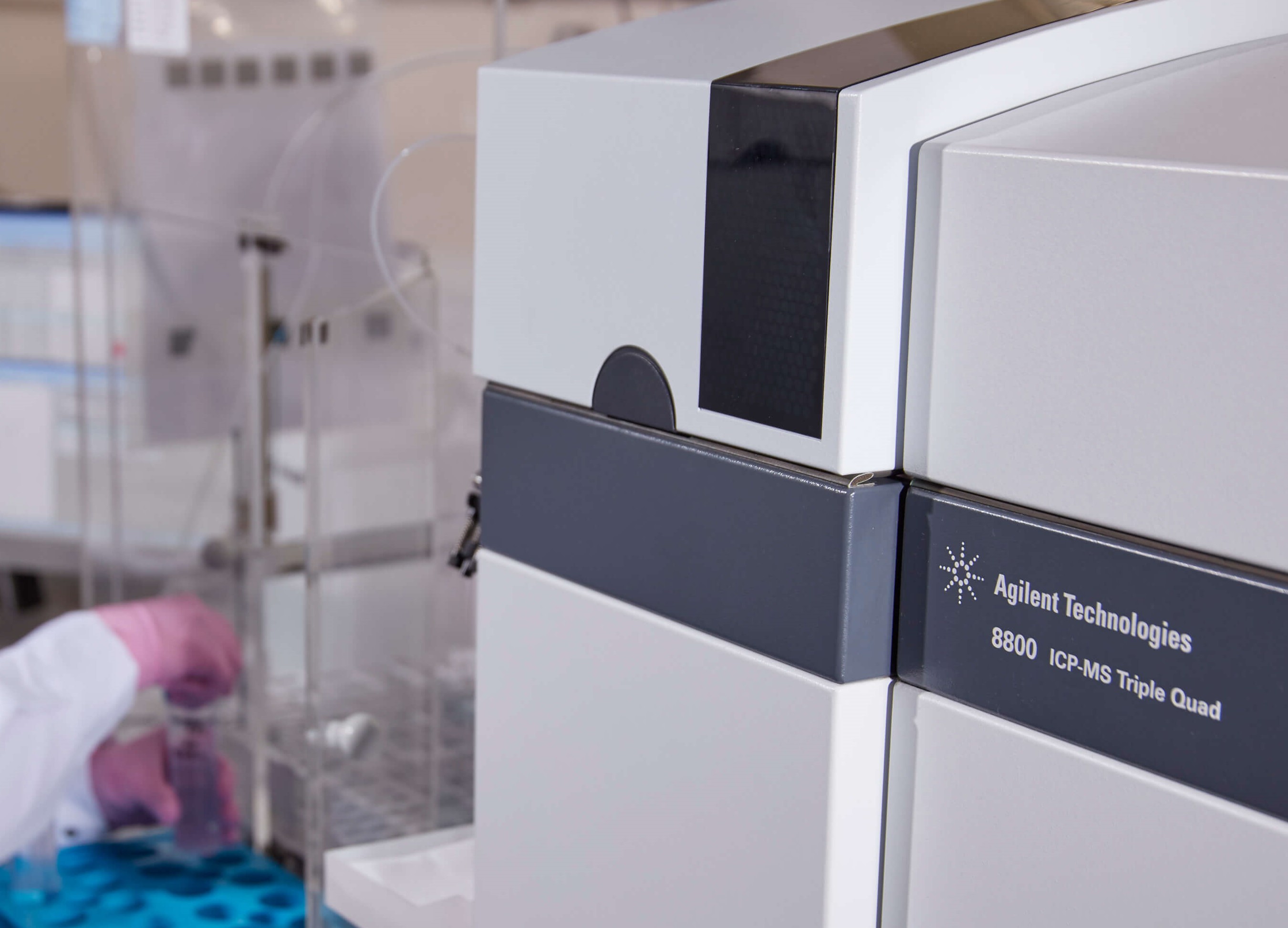
The makeup of biochemical feed bases is complex, but necessarily so. Carbon/ Nitrogen sources, trace metals, vitamins, lipids and buffering agents comprise their main components, each added in precise amounts according to the specific recipe required. These components work together to boost and sustain cell productivity in a bioreactor and are used across many industries, including biopharmaceutical manufacturing, cellular agriculture and cultivated meat, and biofuels. Trace metal testing of biochemical feed bases is a significant part of our testing here at Butterworth Laboratories, and the importance of this is highlighted in this article.
The metals in these feed bases fall into two categories: macrometals and micrometals. Macrometals are mainly alkali earth metals such as Sodium, Calcium, Magnesium, and Potassium, and make up the bulk of the electrolytes required to optimise the metabolic rate of enzymes, whereas micrometals are required in lower concentrations and are used for catalysis and to facilitate electron transfer. Micrometals are mainly transition metals such as Iron, Copper, Manganese and Zinc, but other metallic elements, such as Selenium, can have benefits at trace levels. The concentrations of these micrometals must be tightly controlled, as excessive levels (even at trace levels!) can disrupt the desired biochemical reaction and lead to a poor or even ineffective final product. For example, higher levels of Iron and Copper can generate hydroxyl radicals via the Fenton reaction, which can damage DNA, proteins and membranes. Selenium is also a particularly important example: at appropriate levels, it acts as an antioxidant, but at higher levels it can fuel oxidative stress in cells rather than mitigate it. Therefore, quantitative analysis of their concentrations is essential for both the vendor and the customer to ensure the best quality feed base.
Trace metal concentrations in these products are analysed at Butterworth using methods such as ICP-OES and ICP-MS, the former generally used to quantify macrometals and the latter for micrometals. On top of this, we also perform a semi-quantitative scan by ICP-MS across a whole range of elements. This is useful for detecting and assessing the levels of other elements that may be present as impurities and reducing the efficacy of the feed base. For example, elements such as Pb, Hg, and Cd are toxic to biochemical systems, and a semi-quantitative scan can detect high levels of these elements.
The difficulties that arise from the analysis of feed bases are directly related to their complex makeup. They are readily dissolved in dilute acids, which would normally make analytical solutions simple to prepare with just the addition of an internal standard, requiring only a small amount of sample to obtain robust analytical results. However, obtaining a representative sample from such a varied mixture with this small sample size can lead to problems with the agreement of results between replicates and concomitantly increases uncertainty in the ‘true’ result for the whole batch. Because of this, we take larger sample sizes into solution first before diluting further for analysis. Doing this has improved the homogeneity of results between replicates. Another issue that can arise from analysing these products is suppression of the internal standard signal due to the complex profile of dissolved solids. This stems from the distinct difference in the solution matrix between the sample and standard solutions, and means that analytical results may vary significantly depending on which internal standard is selected, eroding the authenticity of results. Preconditioning the instrument with the sample solution is used in this case to mitigate internal standard suppression. This article provides just a snapshot of why feed bases and monitoring their trace metal makeup are so important. At Butterworth Laboratories, we have a dedicated trace metals team, with many years of expertise in handling, preparing and analysing these products and a wide variety of others. From feed bases to pharmaceutical products and wastewater, our expertise and knowledge are what make us such a valued and trusted contract laboratory for our customers and theirs.
Calvin-John Nicol
Analyst