For over 40 years, Butterworth Laboratories has provided independent, contract analytical services to the global pharmaceutical and related industries.
Trace concentrations are no longer a barrier in gas analysis
18 August 2026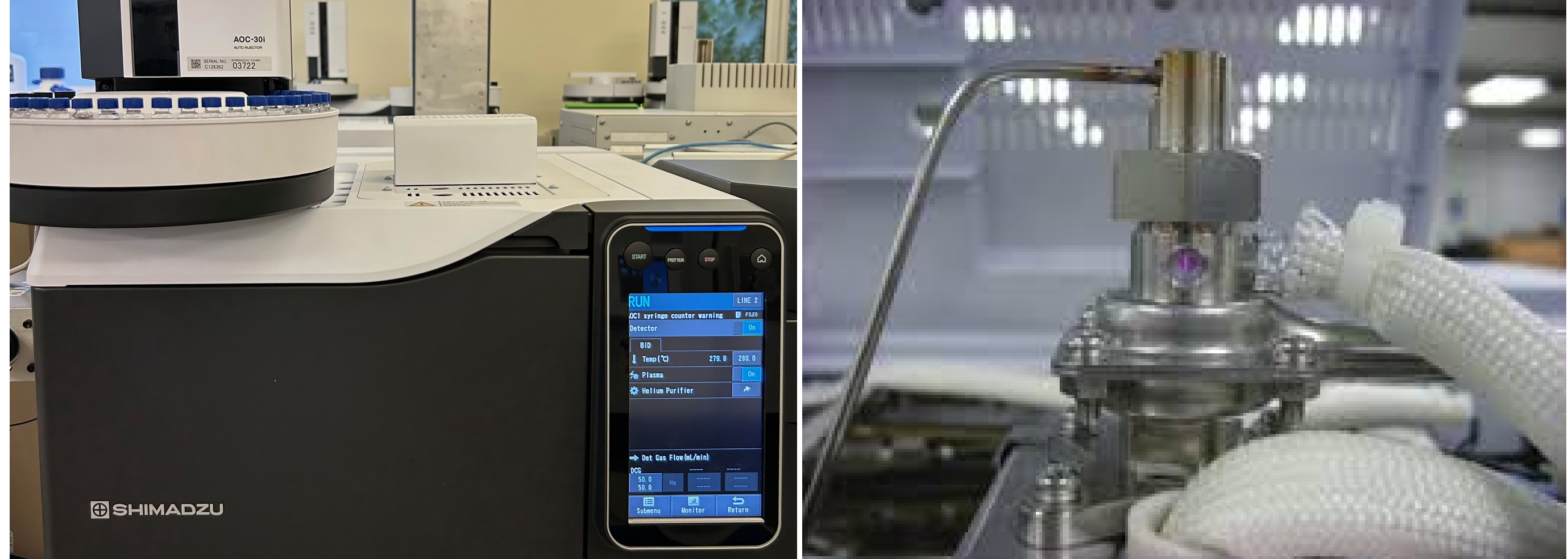
The use of gas analysers such as the Servomex MultiExact 4100 employed at Butterworth has, in recent years, enabled the analysis of gas purity and impurity over a very wide concentration range. Using oxygen as an example, determination of concentrations from 99.99% purity to impurities in other gases down to 10 ppm is achievable with only routine calibration. Gas analysers provide fast analysis times and require little operator training or routine maintenance; however, the main restricting factors for such systems have been that specific detectors/gas cells are required for specific gases and, in some cases, different concentration ranges and that large sample volumes, say 1,000 mL, are required. Again, using oxygen as an example, a paramagnetic detector, which is based on the natural attraction of oxygen to a magnetic field, is required for purity determination, and a zirconium detector, based on electrochemical interaction with a heated zirconium oxide sensor, is required for trace determination. Such detectors made analysis much faster, and allowed the determination of levels much lower than traditional instrumentation.
Traditionally, we have worked with clients to develop analyses of many different gas mixtures, including hydrogen, oxygen, nitrogen, argon, carbon monoxide and carbon dioxide, using Gas Chromatography (GC) with a Thermal Conductivity Detector (TCD), giving a quantitation limit of about 500ppm for oxygen using capillary GC columns. This procedure is based on the effect that the sample components have on the thermal conductance of the carrier gas. The advantage of this technique is that the TCD gives a universal response to gases and requires only a 1 mL sample volume. The disadvantage is that GC instrumentation is more expensive, requires significantly more routine maintenance and operator training, and takes longer than gas analysers.
More recent developments at Butterworth in gas analysis have included the introduction of GC with Barrier Ionisation Discharge (BID) detection. This technology employs dielectric-barrier discharge (DBD) to generate a helium plasma, which is quantified. Helium ionisation technology has been used for some time; however, the most up-to-date instrumentation was developed and introduced by Shimadzu in 2012-13. Shimadzu’s design was intended to overcome some of the stability and electrode degradation problems of earlier helium ionisation detectors, resulting in a lower cost. As with GC-TCD instrumentation, a similar level of routine maintenance and operator training is required. The major advantage is that BID-GC is a universal detector which gives low detection limits, as with gas analysers, while using the same low sample volumes as TCD. For example, a recent method developed at Butterworth easily achieved a quantifiable response to carbon monoxide in oxygen/nitrogen mixtures of only 5 ppm.
Frank Judge – Consultant Chemist