For over 40 years, Butterworth Laboratories has provided independent, contract analytical services to the global pharmaceutical and related industries.
Inductively Coupled Plasma- Mass Spectrometry
22 January 2026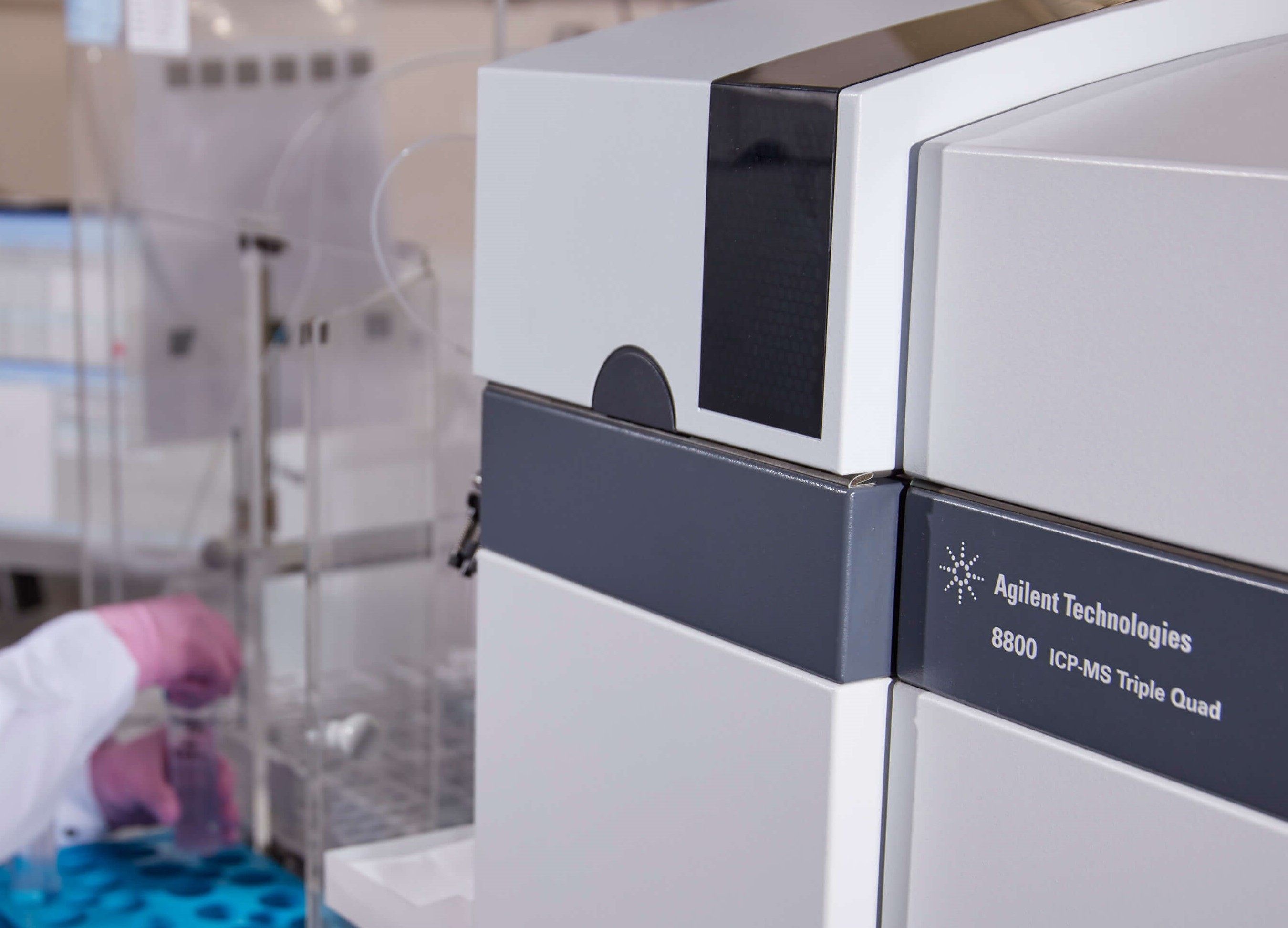
Inductively Coupled Plasma – Mass Spectrometry (ICP-MS) is a technique that allows the detection of trace-level elements in both liquid and solid samples. The technique requires careful preparation of sample and standard solutions as well as a thorough understanding of the complexities of the instrument. This begins with sample solution preparation. As all solutions analysed by ICP-MS are required to be clear and complete, Butterworth Laboratories can offer a wide range of preparation techniques, including aqueous dissolution and microwave digestion using one of four microwaves, which includes the latest Analytix ultraWAVE 3. We are also equipped to both handle and analyse solutions containing Hydrofluoric Acid, with a PFA kit available for all our instruments. This allows for both the detection of silicon and the digestion of silicon and titanium dioxide-based materials when testing for other trace elements. As with any trace analysis, ICP-MS is susceptible to contamination; all preparations are completed in a designated trace metal area of the laboratory, with ICP-MS grade reagents and in vessels with ultra-low leachable trace metal contents.
The basic principle of ICP-MS is that elements in a sample solution are introduced into the instrument as an aerosol, ionised by an argon plasma, and then detected by a mass spectrometer, which is operated under vacuum. With three ICP-MS available (Agilent 7700x, 8800, and 7850), Butterworth has the capacity to handle a large number of and a wide range of testing requirements at any one time, with the capability to test using oxygen, hydrogen, and helium as reaction gases to remove common interferences.
A wide range of testing methods can be offered, including in-house impurity testing, which is compliant with both the PhEur 2.4.20 and USP <233> procedure 2 general chapters, in addition to UKAS-accredited in-house methods suitable for assay and limit testing. Alternatively, a dedicated project team can assist in developing a bespoke, material-specific, validated method. A semi-quantitative scan is also available, which allows for the identification of the possible presence of 66 different elements. All of the options listed have comprehensive QC requirements to ensure that all reported results are accurate. This includes measures to monitor contamination, recovery of the element being tested, instrument drift, accuracy of calibration, and daily instrument performance checks.
If choosing between ICP-OES and ICP-MS, it is important to consider the following: that both techniques allow simultaneous measurement of multiple elements in the same analytical run. ICP-MS is a more sensitive technique with lower quantitation limits achievable, making it suitable for elemental impurity testing. ICP-OES is more suited to materials where the expected concentrations are higher; it can also be used in alloy testing and is less impacted by matrix effects. If unsure, our Metals or Projects teams would be happy to assist with any queries regarding the best analysis for your samples.
Meghann Simcock – Analytical Chemist