Chromatography
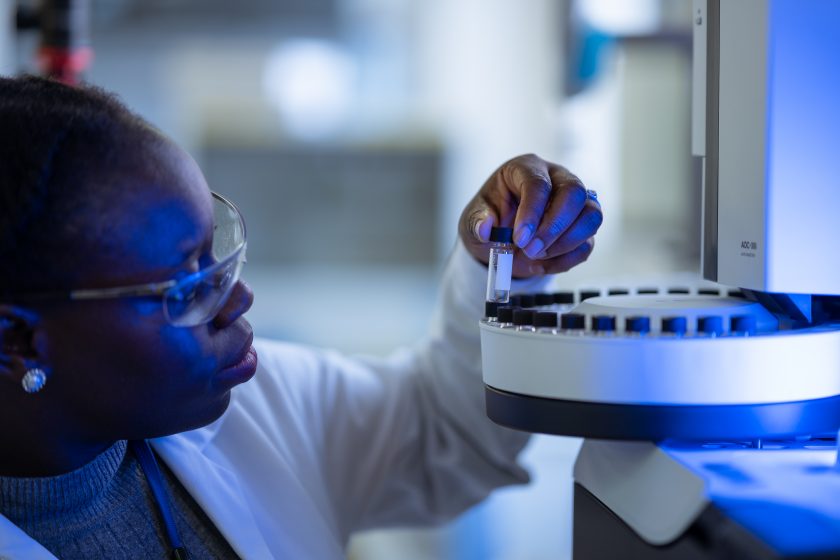
Fitted with a variety of detectors, the laboratories' essentially have three instrument techniques available, all of which are useful for both qualitative and quantitative analysis.
Gas Chromatography (GC)
Gas Chromatography has the following detectors:
- Mass Spectrometry (MS)
- Flame Ionisation (FID)
- Electron Capture (ECD)
- Thermal Conductivity (TCD)
- Nitrogen, Phosphorus (NPD)
Widely used, almost entirely for organic materials, the technique is rapid, simple and can cope with very complex mixtures (100 or more components) and very small samples (nanograms). In addition to the various detectors, the laboratory has a number of automated headspace samplers, and a heated gas injection valve.
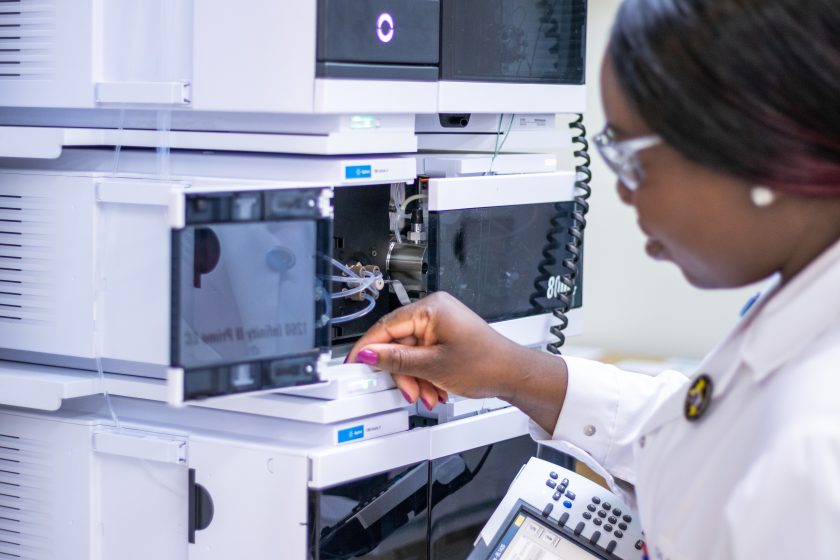
Liquid Chromatography (HPLC)
Liquid Chromatography has the following detectors:
- UV (inc. Diode Array)
- Fluorescence
- Refractive Index (RI)
A technique widely used for organic and inorganic materials. It is especially useful for checks on purity, to monitor reactions and production processes and to characterise complex materials.
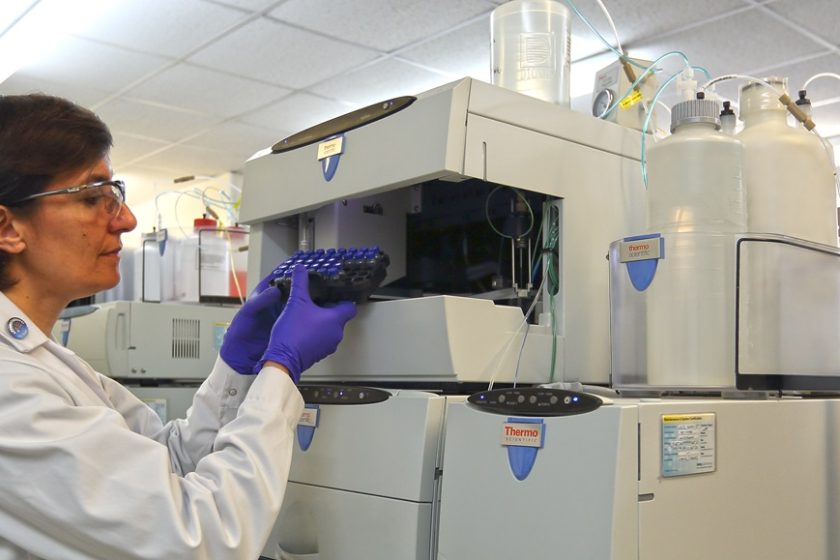
Ion Chromatography (IC)
Ion Chromatography has the following detectors:
- Conductivity
- Pulsed Amperometric (PAD)
- Ultraviolet (UV)
- Refractive Index (RI)
A technique widely used for organic and inorganic materials. It is especially useful for checks on purity, to monitor reactions and production processes and to characterise complex materials.
In addition classical techniques available include:
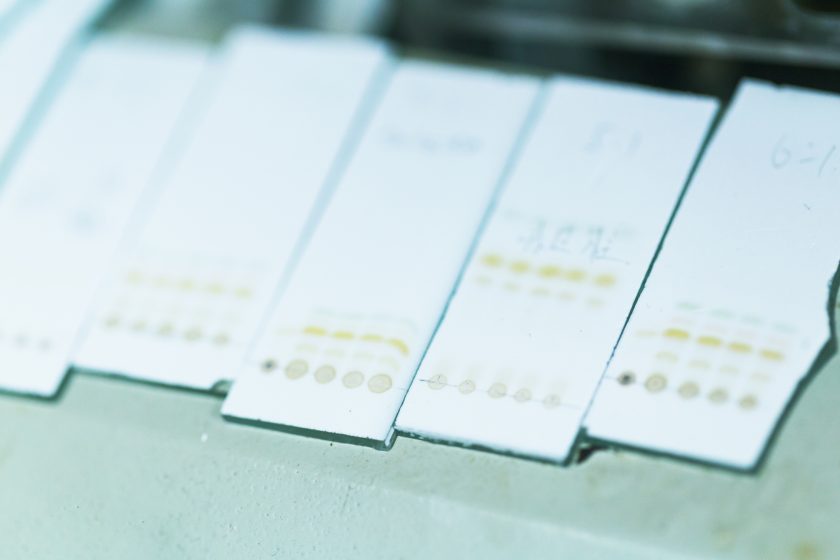
Thin Layer Chromatography (TLC) and Paper Chromatography
Used mainly for qualitative purposes, almost any mixture can be at least partially resolved by one of these techniques. It is ideally suited to quality control, purity checks, clinical diagnosis and forensic tests.
Column Chromatography
Less commonly used than the other techniques as a stand-alone technique.
Return to Techniques
Tel:
+44 (0) 20 8977 0750
Email: info@butterworth-labs.co.uk